Commercial · Sydney
Commercial Kitchen Flooring in Sydney
Seamless, anti-slip epoxy floors for restaurant, café and takeaway kitchens. No grout lines to scrub, easy to sanitise, and installed around your closure days.
- 10-Year Warranty
- $20 million public liability Insured
- Diamond-Ground Prep
About Commercial Kitchen Flooring
A commercial kitchen floor works harder than almost any other floor in a business. It is wet for most of the day, it collects grease, oil and food scraps, it gets hot wash-downs and harsh cleaning chemicals, and it has to stay safe underfoot for staff moving fast with hot pans. It also has to satisfy the food safety inspector. Tiles and grout struggle with all of that: grout lines soak up grease and water, tiles crack under dropped equipment, and every broken joint becomes somewhere for grime and bacteria to collect.
A seamless epoxy floor solves those problems. Laid as one continuous, impervious surface over properly prepared concrete, it has no grout lines to scrub, does not absorb grease or water, and can follow the falls to your floor wastes so water drains away instead of pooling. Where the floor meets the walls we can form a coved skirting, so there is no corner for grime to build up in and the floor washes down as one surface.
Slip resistance is built in, not added as an afterthought. We broadcast anti-slip aggregate into the coating at a level suited to a wet, greasy kitchen, so the floor grips underfoot but can still be mopped and squeegeed clean at the end of a shift. The system is chosen for how your kitchen actually runs, including how hot and wet it gets and how much trolley and equipment traffic it takes.
We know a kitchen cannot close for long. Most restaurant, café and takeaway kitchens are prepared and coated over a closure day or a weekend, with faster-curing systems used where you need to reopen quickly. Every job starts with diamond grinding, crack repair and moisture testing, and is backed by our 10-year written warranty and $20 million public liability cover. If your kitchen floor is tired, cracked or hard to keep clean, book a free on-site quote.
Why Choose Our Commercial Kitchen Flooring
- Seamless surface with no grout lines to trap grease, water or bacteria
- Anti-slip texture suited to wet, greasy kitchen floors
- Stands up to hot wash-downs, fats, oils and cleaning chemicals
- Coved edges and falls to floor wastes so the floor washes down cleanly
- Installed around your closure days so you can reopen quickly
Coating Systems for Commercial Kitchen Flooring
We recommend the right system for how you use the space and the condition of your slab. The systems best suited to commercial kitchen flooring are:
- Solid Colour Epoxy — A clean, uniform single-colour high-build epoxy for a crisp commercial-look floor that brightens the space and cleans easily.
- Anti-Slip & Safety Coatings — Graded aggregate bound into a coating to deliver measurable AS 4586 slip resistance for ramps, wet areas, kitchens and pool decks.
- Epoxy Mortar Systems — Aggregate-filled, trowel-applied high-build epoxy for extreme compression, impact and wear — and for rebuilding damaged slabs.
Not sure which is right? Our coating systems guide compares durability, cost, UV stability and cure time side by side.
Surface Preparation Comes First
The single biggest factor in whether your commercial kitchen flooring lasts is what happens before the coating goes down. We diamond-grind the concrete to the correct CSP 2–3 profile, moisture-test the slab, structurally repair cracks and joints, and apply a penetrating primer. Skipping any of this is exactly why cheap coatings bubble, peel and delaminate within months. Read more about how we prepare concrete.
Pricing & Timeframe
As a guide, commercial kitchen flooring typically costs from around $45–$110 per m², depending on the system, the size of the area and the condition of the concrete. Every quote is a fixed price confirmed after we inspect your floor in person — there are no hourly surprises. Most commercial floors are staged around your operations, and every job is backed by our 10-year written warranty and $20 million public liability public liability cover.
Typical commercial kitchen flooring prices
| Kitchen | Typical price |
|---|---|
| Café or takeaway kitchen (~20m²) | $900 – $2,200 |
| Restaurant kitchen (~50m²) | $2,250 – $5,500 |
These are indicative ranges worked out from our per-square-metre rates. Removing old tiles, coving and extra slip resistance can add to the price, and your fixed quote is confirmed after we inspect the kitchen.
What Food Safety Inspectors Look For
The Food Standards Code (Standard 3.2.3) sets out what floors in food premises have to do, and your council’s food safety officer checks against it. Here is how a seamless epoxy floor meets each requirement:
| The floor must | How seamless epoxy meets it |
|---|---|
| Be able to be effectively cleaned | Smooth, seamless surface with no grout lines. Mops and squeegees clean. |
| Not absorb grease, food particles or water | Impervious resin surface sealed over the concrete. |
| Be laid so water does not pool | The coating follows the falls to your floor wastes. |
| Give pests nowhere to shelter, as far as practicable | No cracked tiles or open joints, and coved edges at the walls. |
Epoxy vs Tiles in a Commercial Kitchen
Tiles are the traditional kitchen floor, but they are also the most common reason a kitchen floor becomes hard to keep clean.
| Tiles and grout | Seamless epoxy | |
|---|---|---|
| Joints | Hundreds of grout lines | None |
| Grease and water | Grout soaks it up and stains | Sits on the surface and wipes off |
| Dropped pots and equipment | Tiles crack and come loose | Handles everyday knocks, and damage can be patched |
| Daily cleaning | Scrubbing grout lines | Mop and squeegee |
| Slip resistance | Depends on the tile, and worn tiles get slippery | Anti-slip texture built into the coating |
Getting It Done Around Your Trading Hours
Most restaurant, café and takeaway kitchens are done over a closure day or a weekend. We remove failing tiles if needed, diamond-grind and repair the slab, then lay the base coat with anti-slip aggregate and finish with a protective topcoat. Light foot traffic is typically fine within 24 hours, we use faster-curing systems where you need to reopen sooner, and larger kitchens can be done in stages.
Running a food factory, bakery or cold store rather than a kitchen? Our food-grade epoxy flooring page covers the heavier systems we use for production areas, and our anti-slip floor coatings page explains slip ratings in more detail.
Our Commercial Kitchen Flooring Process
A disciplined, preparation-first process on every job — single garage or full warehouse.
- 01
Free On-Site Quote
We visit your Sydney property, assess the floor area and condition, discuss the coating system options, and provide a written fixed-price quote. No obligation.
- 02
Surface Preparation
We diamond-grind the concrete to the correct profile, test for moisture, repair any cracks or damage, and apply primer. This step decides whether your floor lasts 10 years or 10 months.
- 03
Base Coat Application
The epoxy base coat is applied to the prepared surface. For flake systems, decorative chips are broadcast at this stage. For metallic systems, pigment and metallic powder are worked into the wet coat.
- 04
Topcoat & Sealing
A clear polyurethane or polyaspartic topcoat is applied for protection, sheen and slip resistance. This is the surface you see and walk on.
- 05
Cure & Handover
Light foot traffic typically within 24 hours, full vehicle or heavy traffic within 72 hours. We walk through the finished floor with you and leave the site clean.
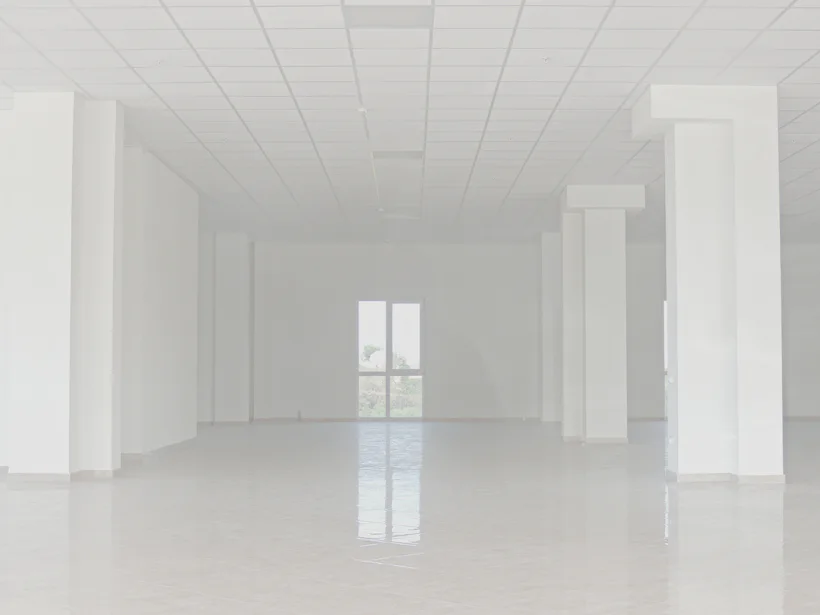
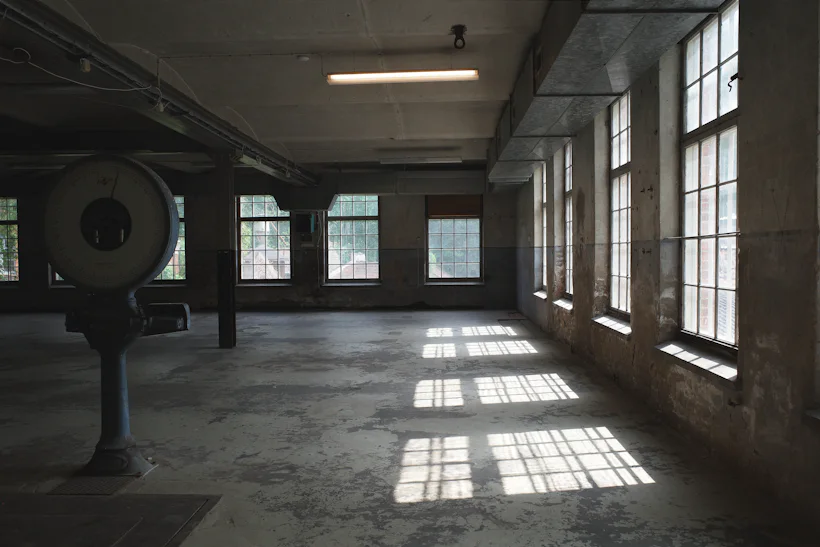
Commercial Kitchen Flooring — Before & After
Drag the slider to reveal the transformation on recent Sydney projects.
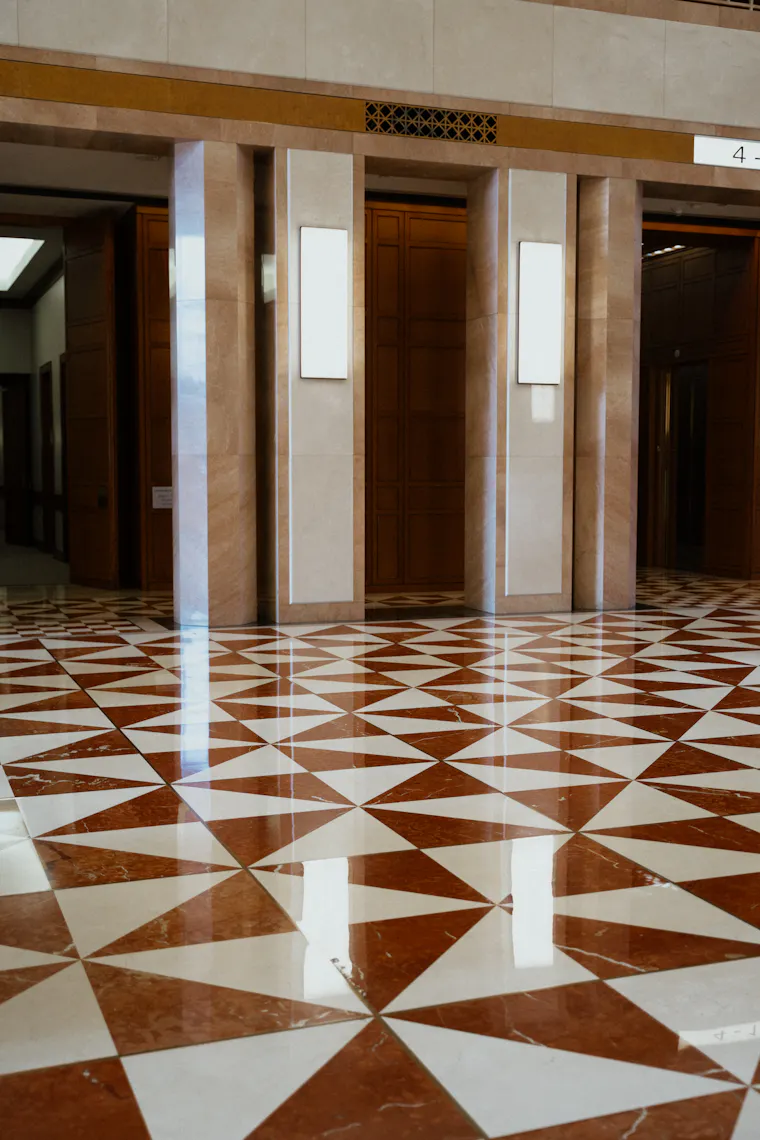
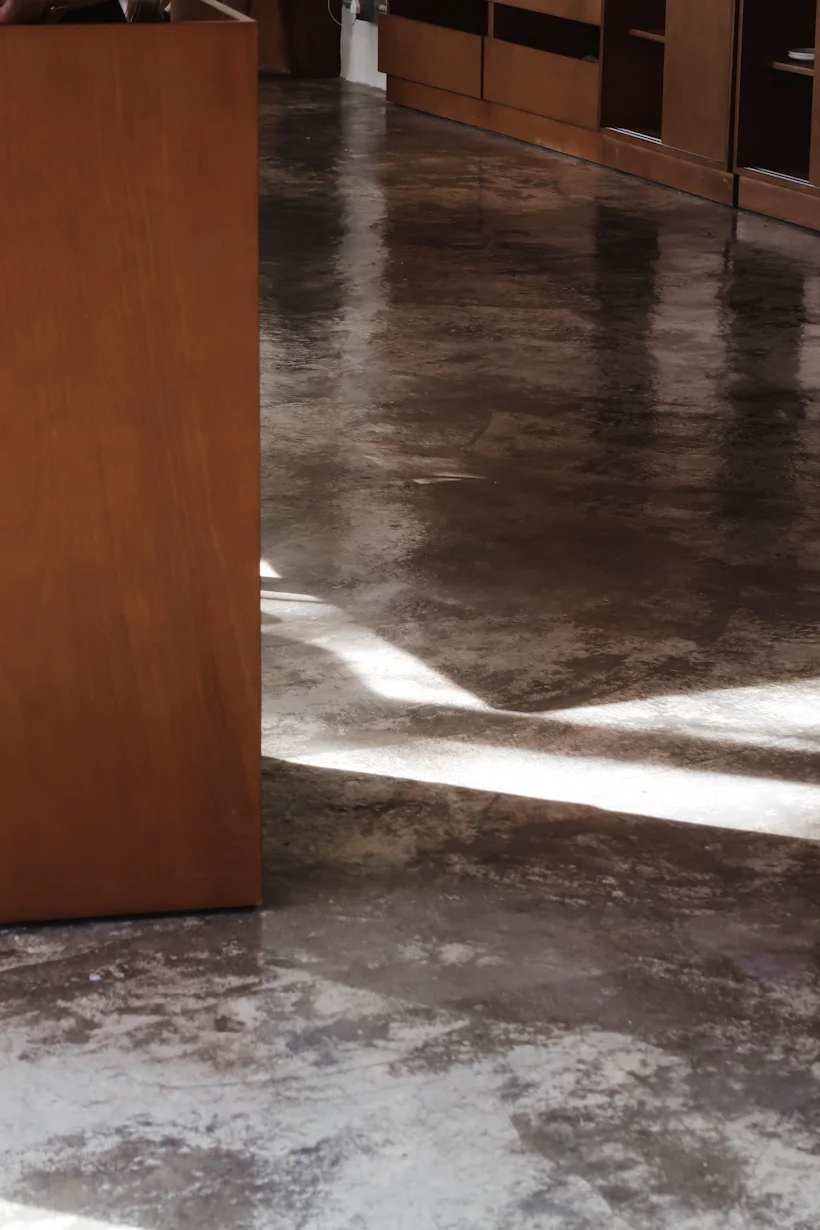
Showroom — Granville
Metallic epoxy · 320m² · Granville
Large automotive showroom floor in a silver-and-charcoal metallic.
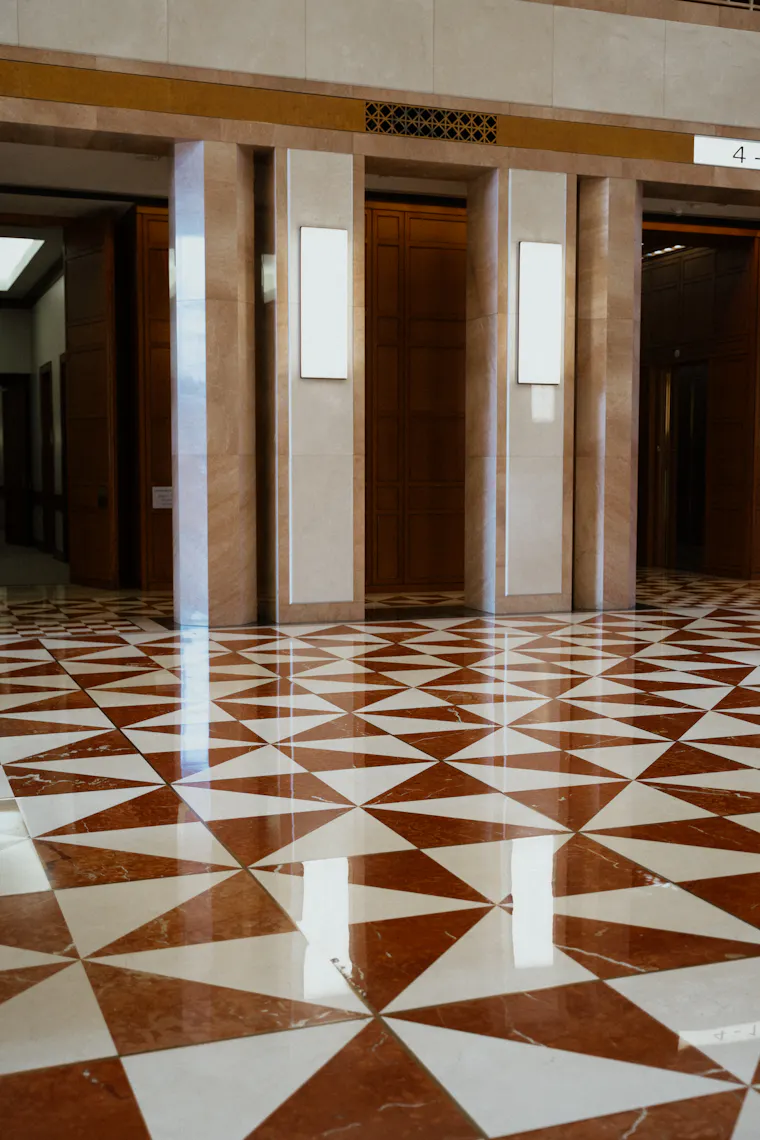
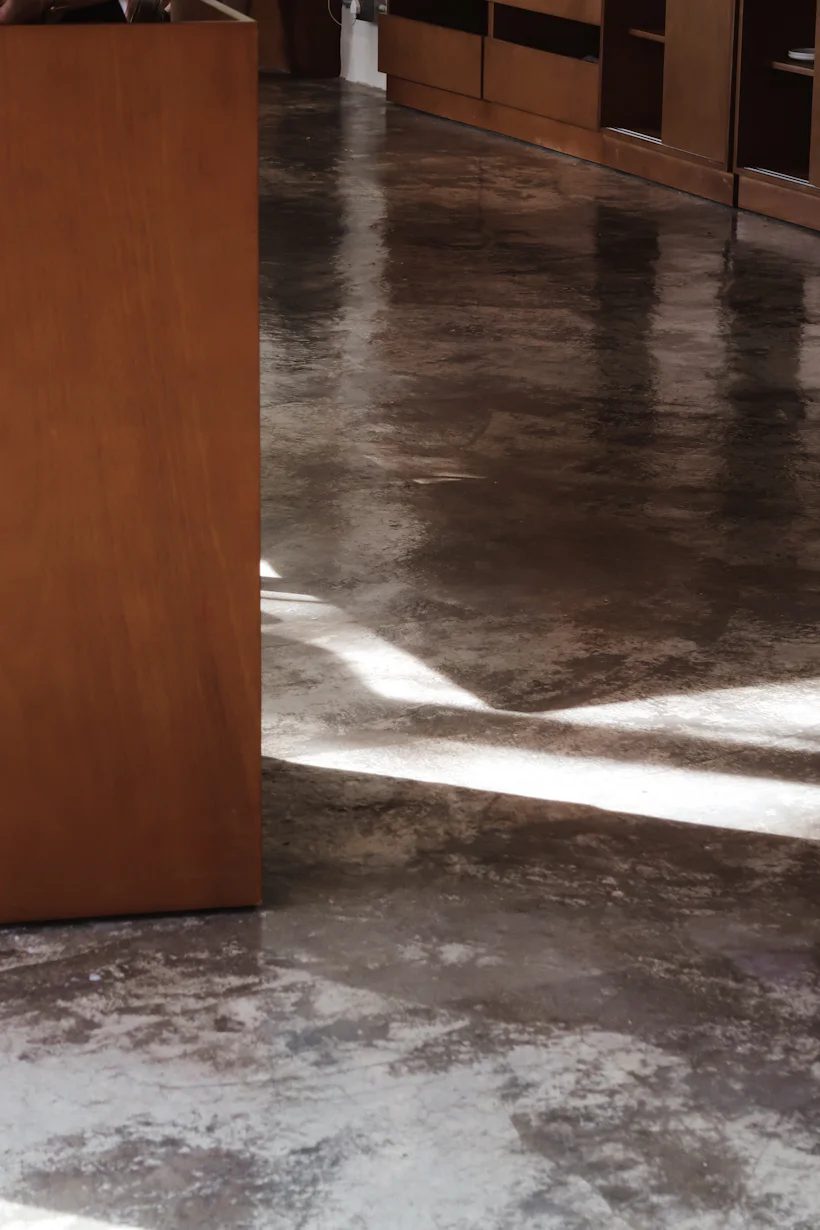
Reception — Bella Vista
Metallic epoxy · 85m² · Bella Vista
Corporate reception feature floor in a copper-bronze metallic.
Showroom — Parramatta
Metallic epoxy · 280m² · Parramatta
Retail showroom feature floor installed in sections around trading hours.
Drag any slider to reveal the transformation. Browse all projects.
Commercial Kitchen Flooring — FAQs
How much does commercial kitchen flooring cost?
Commercial kitchen epoxy systems typically range from $45 to $110 per square metre. A small café kitchen of around 20m² usually sits between $900 and $2,200, depending on the slab condition, whether tiles need removing, coving and the level of slip resistance required. We give a written fixed price after inspecting the kitchen.
What do food safety inspectors look for in a kitchen floor?
Under the Food Standards Code (Standard 3.2.3), floors in food premises must be able to be effectively cleaned, must not absorb grease, food particles or water, must be laid so water does not pool, and, as far as practicable, must not give pests anywhere to shelter. A seamless, impervious epoxy floor laid to the drains ticks all four.
Is epoxy better than tiles for a commercial kitchen?
For most kitchens, yes. Tiles look fine when new, but grout lines absorb grease and water and tiles crack under dropped pots and equipment. A seamless epoxy floor has no joints, does not absorb spills, and is far quicker to clean. When tiles are failing we usually remove them and coat the slab underneath.
How slippery is an epoxy kitchen floor?
A plain gloss epoxy can be slippery when wet, which is why we never install one in a kitchen. We broadcast anti-slip aggregate into the coating so the floor grips underfoot when it is wet or greasy, while staying smooth enough to mop and squeegee clean.
How long will my kitchen be closed?
Most small to mid-sized kitchens are prepared and coated over a closure day or a weekend. Larger kitchens can be done in stages. Light foot traffic is typically fine within 24 hours, and we use faster-curing systems where you need to reopen sooner.
Can the floor handle hot water and steam cleaning?
Yes. We specify systems that cope with hot wash-downs, fats, oils and cleaning chemicals. If parts of your kitchen get extreme heat, such as directly in front of fryers or combi ovens, tell us at the quote and we will specify for it.
Do you do coving and drainage falls?
Yes. We can form a coved skirting where the floor meets the walls and work the coating to your existing falls and floor wastes, so water drains away and the whole floor washes down as one surface.
Do you also do food factories and processing floors?
Yes. Larger food manufacturing, processing and cold-storage floors are covered on our food-grade epoxy flooring page, which explains the heavier systems we use for production areas and audits.
Get Your Free Commercial Quote
Book a free, no-obligation assessment for your commercial kitchen flooring project anywhere in Sydney.